Author
Vita Smutko
Born in the Republic of Georgia and raised along the Black Sea, she later fled the country with her family as a refugee. Through her father’s extraordinary story of survival, Vita honors those who endured famine, war, persecution, and the Soviet labor camps—and preserves their courage, faith, and humanity.
My Father's Story
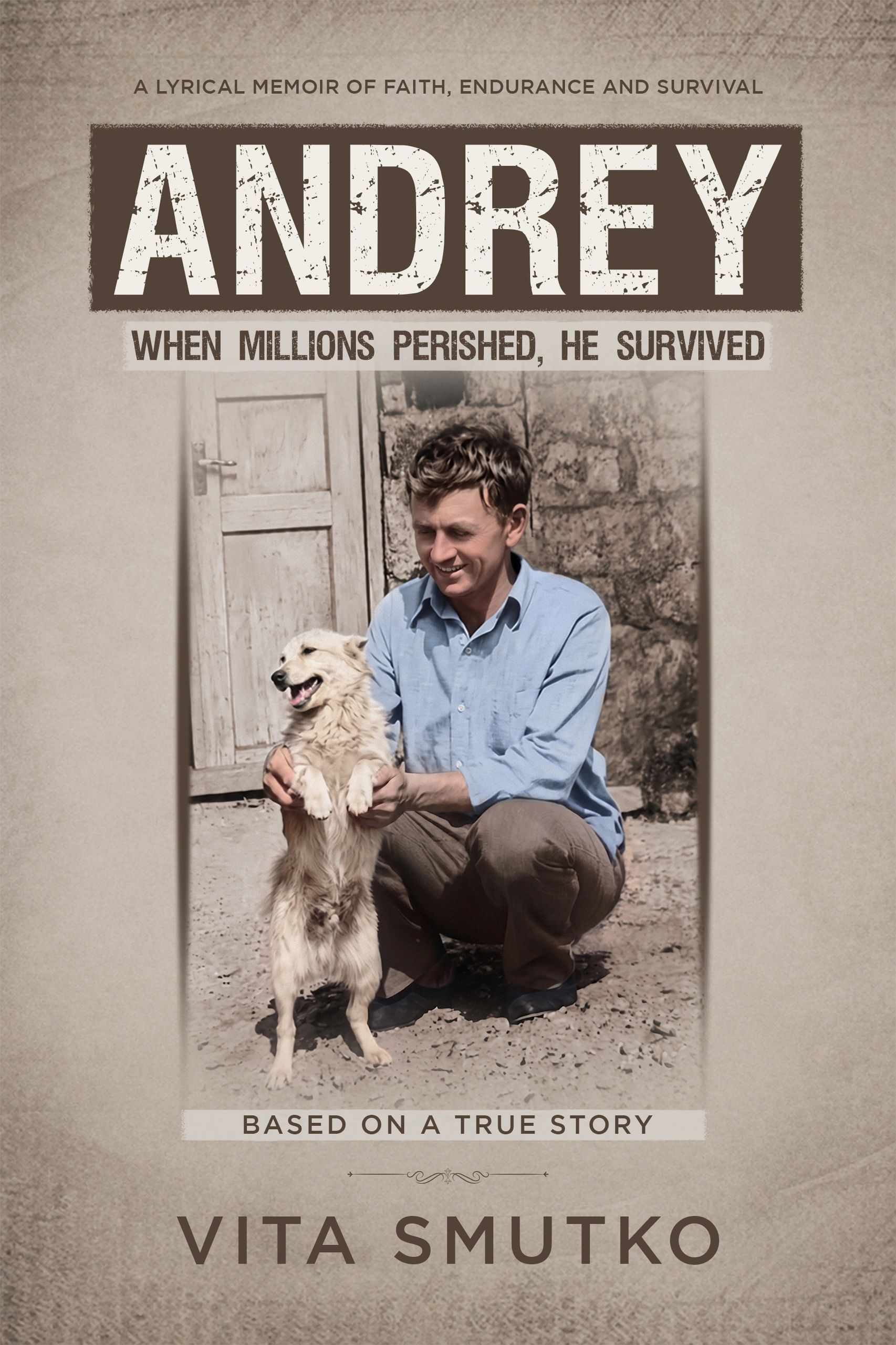
When millions perished, he survived.
Andrey was born on March 5, 1932, in the village of Chaplynka in southern Ukraine, as a man-made famine swept across the land. Before he was old enough to understand the meaning of hunger, he had already witnessed its terrible cost. Food disappeared, families were torn apart, and countless lives were lost. Half of Andrey’s siblings did not survive.
Yet amid suffering and fear, his parents gave him something no authority could confiscate: faith. Their prayers, whispered in secret, planted within him a quiet trust in God that would sustain him through the darkest years of his life.
A Childhood Shaped by War
Andrey’s childhood unfolded beneath the shadow of political oppression and war. He was still a boy when German forces occupied his village during World War II. His family’s home was commandeered, his father was taken to the front, and his siblings were sent away as forced laborers for the Germans.
When the war finally ended, peace did not truly return. The land remained scarred by destruction, unexploded weapons, hunger, and fear. A wartime explosion injured Andrey’s hand, leaving him with a permanent reminder that survival often carried wounds of its own.
Determined to help his family, he left school and began working while still a child. He learned early that endurance was not an idea—it was a daily necessity.
Sentenced at Fifteen
At only fifteen years old, Andrey was arrested for a crime he did not commit.
He was sentenced to fifteen years in Soviet prisons and forced-labor camps. In an instant, his youth, freedom, and future were taken from him.
He passed through overcrowded cells where hunger, illness, humiliation, and violence were part of everyday life. He learned when to remain silent, whom to trust, and how to recognize danger before it arrived. Still only a boy, he was forced to develop the instincts of a man fighting to stay alive.
Eventually, he was transported across the vast Soviet Union to Kolyma, one of the most feared regions of the Gulag system.
The Frozen World of Kolyma
In the remote wilderness of northeastern Siberia, prisoners endured forced labor, starvation, disease, brutality, and temperatures that could fall far below zero. Kolyma was a place designed not merely to imprison human beings, but to break them.
Andrey labored in the frozen landscape with inadequate clothing and little food. He witnessed cruelty that would remain with him for the rest of his life. But he also encountered unexpected acts of compassion—a piece of bread shared, a warning quietly given, or one prisoner helping another stand when his body could no longer carry him.
In a world where nearly everything had been taken from him, Andrey held on to the one thing his captors could not reach: the faith planted in him as a child.
His survival was not a single moment of courage. It was a choice made repeatedly—in hunger, exhaustion, loneliness, and fear—to endure one more hour, one more night, and one more day.
A Life Beyond Survival
Andrey survived famine, war, wrongful imprisonment, and the deadly labor camps of Kolyma. But his story is not defined only by what he suffered. It is also the story of the man he became afterward.
The hardships he endured shaped his strength, his compassion, and his understanding of human nature. They taught him the value of freedom, family, kindness, and faith. Although he carried the memories of those years throughout his life, he refused to allow suffering to have the final word.
For many years, much of Andrey’s story remained within the family. Like so many survivors of oppression, he carried memories too painful—and once too dangerous—to speak about openly.
His daughter, Vita Smutko, eventually began gathering his recollections and placing them within the history through which he had lived. In writing ANDREY: A Memoir of Faith, Endurance and Survival, she became the guardian of a testimony that might otherwise have disappeared.
Andrey’s story now stands as a memorial to those who survived, to those who vanished without graves, and to the generations who must never forget.
It is not only a story of suffering.
It is a story of faith that endured, humanity that survived, and a life that darkness could not extinguish.